


Vietnam e-Visa for Overseas Vietnamese Visiting Family
By VietnamVisaEasy Visa Team · 2025-06-13 · Updated 2026-11-08
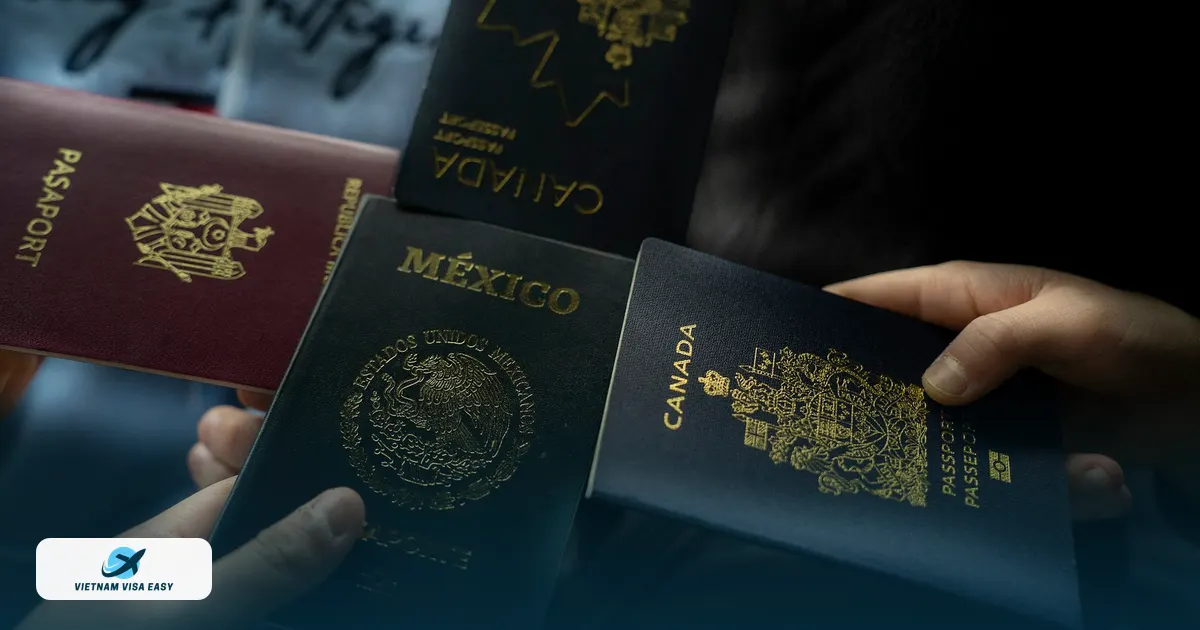
The Vietnam e-visa for overseas Vietnamese is a common question before a family trip home. Vietnamese heritage alone does not remove the visa requirement: what matters is the passport you travel on. This guide explains which documents let you enter, when an e-visa is the simplest choice, and the details that matter for a family visit, including children born abroad.
When do you need a Vietnam e-visa for overseas Vietnamese?
It depends on the passport you use.
| Your situation | What you need |
|---|---|
| Valid Vietnamese passport | Enter as a Vietnamese citizen |
| Foreign passport, visa-exempt nationality | No visa within the exemption period |
| Foreign passport, visa exemption certificate | No separate visa while the certificate is valid |
| Foreign passport, none of the above | E-visa or another visa |
Check whether your foreign passport is exempt in our Vietnam visa exemption guide. A UK or German passport, for example, gives 45 days visa-free, while a US, Canadian or Australian passport needs a visa.
What is the visa exemption certificate?
A document for people of Vietnamese origin and their close family. It is issued by Vietnamese embassies and consulates abroad and allows visits without applying for a separate visa each time. It suits families who visit often. Ask the Vietnamese embassy or consulate where you live about the current conditions, documents and processing time, because they handle the application.
For a single trip planned at short notice, the e-visa is usually faster.
How does the e-visa work for a family visit?
It is the standard e-visa, with a few details that matter more.
- Address: you can give your relative's home address as your temporary address.
- Length: the e-visa allows up to 90 days, and the government fee is the same for 30 or 90 days, so ask for the full period for a long family stay.
- Entry type: choose multiple entry if you will visit a neighbouring country and return.
- Names: enter your name exactly as in your foreign passport's machine-readable lines, without Vietnamese accents.
Apply on the official e-visa portal or through an agency that files on the same system.
Do children born abroad need their own e-visa?
Yes, each child with a foreign passport needs a separate application. There is no family application, and a child cannot be added to a parent's e-visa. Children who also hold a valid Vietnamese passport can enter on that passport instead. Our guide to the Vietnam e-visa for children explains how to take a baby's photo for the form.
What should you prepare?
The same documents as any e-visa.
- A foreign passport valid for at least 6 months from arrival.
- A photo of the passport data page with both machine-readable lines visible.
- A recent portrait photo on a white background, without glasses.
- Your arrival date, Vietnamese arrival airport and your relative's address.
- A card for the government fee: US$25 single entry or US$50 multiple entry.
What if you travel with both a Vietnamese and a foreign passport?
Use the same passport to enter and leave. Dual nationals should decide before the trip which passport to use. If you enter on a foreign passport with an e-visa, leave on that passport too. If your Vietnamese passport has expired, renew it through the embassy, or use the foreign passport with the right visa.
How long can you stay with family?
Up to 90 days on the e-visa. You choose the start and end dates when applying. Arriving later than the start date is fine, but the end date does not move. If you hold a visa exemption certificate, the length of each stay follows the certificate's rules; check them with the embassy that issued it. Staying past your permitted date leads to fines when you leave, even for family reasons.
What about Tet and other busy periods?
Apply early. Many overseas Vietnamese travel home for Tet, the Lunar New Year. Vietnamese offices close for several days around Tet, and e-visa processing pauses. Apply at least 2–3 weeks before a Tet trip, and check the holiday dates in our processing time guide. Flights, trains and buses also fill up quickly during this period, so book them as early as the visa, ideally several months ahead.
Do you need to register where you stay?
Your stay must be declared with the local authorities. Hotels do this automatically. When you stay in a family home, your relatives usually declare your stay with the local police, often online. Ask them to do it soon after you arrive.
What if the family visit is urgent?
Apply for a fast speed during Vietnamese office hours. For a sudden family emergency, the e-visa can be issued in hours on a working day. Our urgent processing guide explains the speeds, and our emergency visa guide covers what is possible at night and on weekends.
Frequently asked questions
Do overseas Vietnamese need a visa to visit Vietnam?
If you travel on a foreign passport, yes, unless that nationality is exempt or you hold a visa exemption certificate.
What is the visa exemption certificate?
A document for people of Vietnamese origin and their close family, issued by Vietnamese embassies and consulates, that allows visits without a separate visa.
Can I give my family's address on the e-visa?
Yes. You can list your relative's home address in Vietnam as your temporary address.
Do my children need their own e-visa?
Yes. Every child with their own foreign passport needs a separate application.
Need your visa today?
Urgent options from 30–60 minutes, also on weekends & holidays.
Comments (0)